

Best Insoles for Flat Feet: Expert-Reviewed Guide to Find the Right Support
Flat feet affect nearly 30% of the adult population — yet most people don't realize their knee, hip, or lower back pain starts at ground level. When your arch collapses under your body weight, your foot rolls inward with every step, sending a chain of stress up through your entire musculoskeletal system. The right insoles for flat feet don't just add cushioning — they restore the alignment your foot is missing, intercepting that pain cycle at its source.
Here's how to find the one that actually matches your pain pattern.
Why Flat Feet Cause Pain And What an Insole Actually Does?
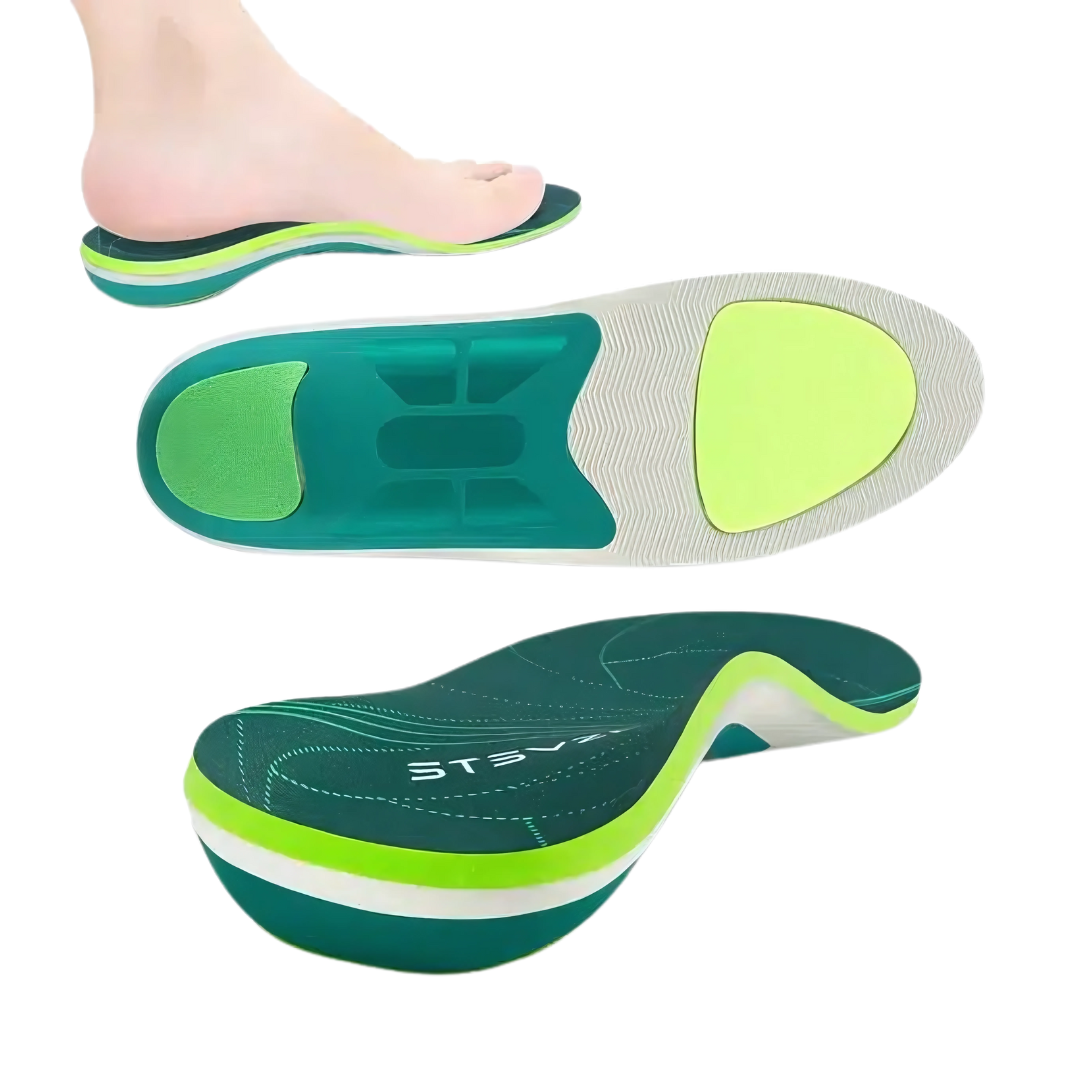
The arch of your foot is a dynamic shock absorber. With every step, it compresses and springs back, distributing load evenly across your heel, midfoot, and forefoot. When that arch is absent or collapsed — a condition known as pes planus — that distribution mechanism fails entirely.
The immediate consequence is overpronation: your ankle rolls inward, your tibia twists inward with it, and that rotational stress travels straight up to your knees, hips, and lumbar spine. This is why flat-footed individuals frequently report pain far from their feet.
A quality insole addresses this by doing three things: providing a semi-rigid arch that holds the foot's natural curve under load, a deep heel cup that locks the calcaneus in neutral position, and a structured base that prevents the inward collapse before it starts.
Soft foam cushioning alone does none of this. Structure is what matters.
Check out this guide: Do Bunion Splints Work? What the Evidence Really Says
The 5 Features That Actually Matter in a Flat Feet Insole
Not all insoles are built for flat feet. Here's what separates a genuinely effective orthotic from a glorified foam pad.
- Semi-rigid arch support: A soft arch collapses under body weight within hours and provides zero biomechanical correction. Look for a structured platform made from TPU, carbon fiber, or high-density EVA that maintains its shape throughout the day.
- A deep heel cup: It cradles the calcaneus, prevents lateral drift, and keeps your entire foot anchored in a neutral position — stopping overpronation before it starts.
- Material durability: TPU shells and cork bases outlast basic foam by months. Budget insoles often feel great on day one and are functionally useless by week six.
- Shoe compatibility: A thick orthotic that works perfectly in a hiking boot will ruin the fit of a dress shoe. Always match insole profile to your footwear volume.
- Activity-specific design: Running generates up to three times your body weight in impact force. An insole built for standing all day simply isn't engineered for that load.
Top 7 Recommended Insoles for Flat Feet
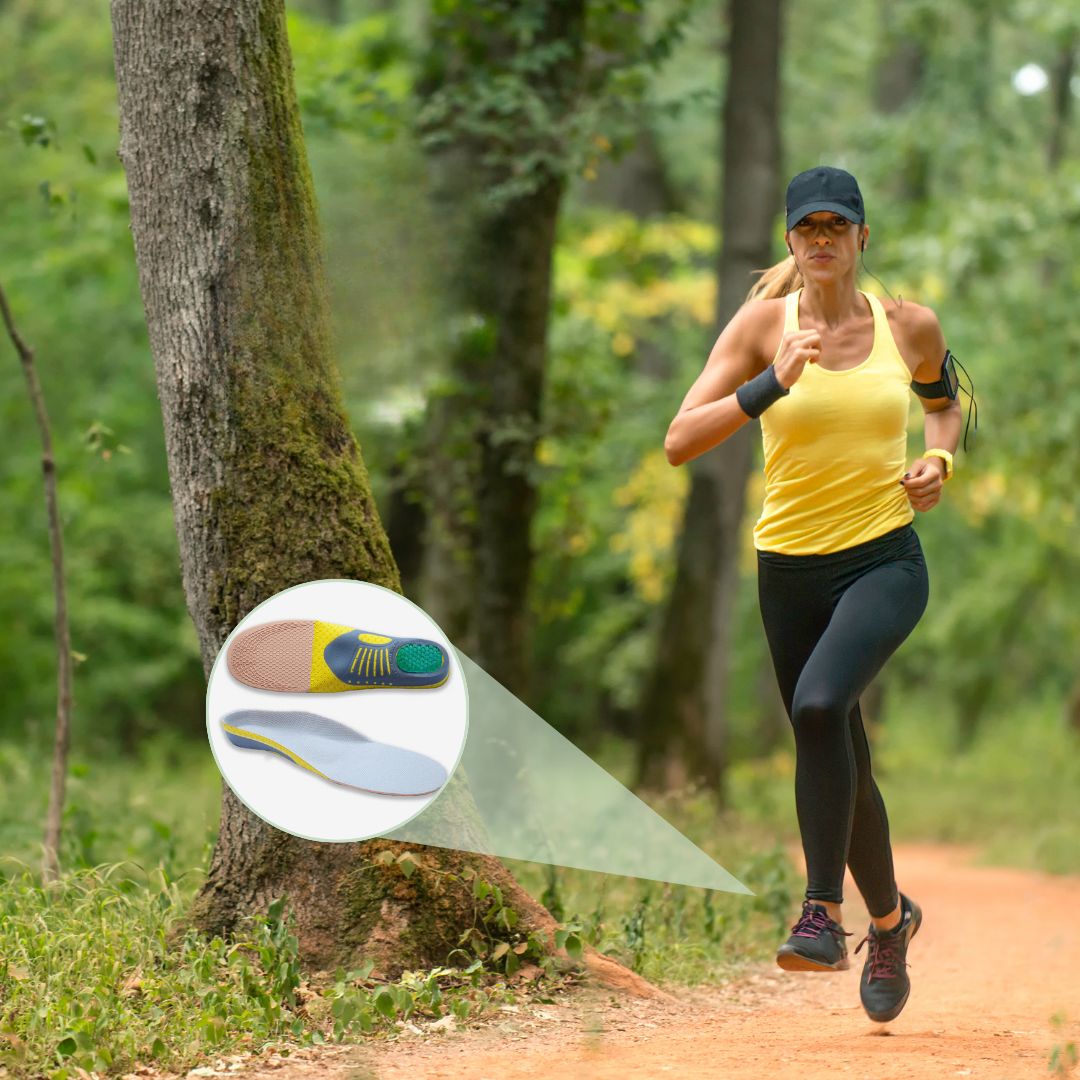
No single insole works for every flat-footed individual. Pain location, activity level, and footwear type all determine the right match. Here are our seven picks, each selected for a specific profile.
1. Flat Foot Arch Support Insole — Best Overall
If you're looking for one insole that addresses the core mechanics of flat feet, this is it. A structured medial arch platform combined with a deep heel cup delivers immediate alignment correction for everyday wear. The semi-rigid base holds its shape under sustained load, making it reliable for both long work shifts and casual daily use. Compatible with most standard athletic and casual footwear.
- Best for: anyone with flat feet seeking a dependable, all-purpose orthotic solution.
2. ConfortPlus™ Pain-Relief Orthopedic Insoles — Best for All-Day Standing
Engineered for people on their feet for eight hours or more, the ConfortPlus™ combines structured arch support with multi-zone cushioning that targets the heel, arch, and forefoot simultaneously. The top layer reduces friction and heat buildup during extended wear. Where most insoles compress and lose effectiveness mid-shift, this one maintains consistent support from morning to close.
- Best for: retail workers, nurses, teachers, and anyone logging long hours on hard floors.
3. Plantar Fasciitis Insole – Daily Comfort — Best for Flat Feet + Plantar Fasciitis
Flat feet and plantar fasciitis are closely linked — overpronation places chronic tension on the plantar fascia ligament, and that tension accumulates into sharp heel pain over time. This insole is specifically designed to reduce strain on the fascia by lifting the arch and distributing load away from the heel insertion point. The result is measurable pain relief from the first wear.
- Best for: flat-footed individuals experiencing morning heel pain or chronic plantar fascia tension.
4. Heel Spur Insoles – Heel Pain Relief — Best for Heel Spur Pain
Heel spurs — bony calcium deposits that develop on the underside of the calcaneus — are a direct consequence of prolonged plantar fascia stress, which flat feet accelerate. These insoles feature targeted heel cushioning and offloading geometry that reduces direct pressure on the spur site, while the arch support addresses the root biomechanical cause.
- Best for: flat-footed individuals with a diagnosed heel spur or persistent localized heel pain on impact.
5. Orthopedic Insoles for Plantar Pain — Best for Midfoot & Forefoot Pain
When pain concentrates under the arch or across the metatarsal heads rather than at the heel, a different pressure distribution strategy is needed. These insoles feature a metatarsal pad and contoured midfoot support that lifts and spreads load across the forefoot, relieving the hotspots that standard flat foot insoles often miss.
- Best for: flat-footed individuals with burning or aching pain across the ball of the foot or midfoot area.
6. Orthopedic Insoles for Bunions — Best for Flat Feet + Hallux Valgus
Bunions and flat feet frequently co-exist — overpronation increases the valgus stress on the first metatarsophalangeal joint over time. These insoles are designed with a wider forefoot profile and reduced pressure zones around the first toe joint, preventing the insole itself from aggravating the bunion while still delivering full arch and heel support.
- Best for: flat-footed individuals managing bunion pain who struggle to find insoles that don't worsen toe discomfort.
7. Elite Performance Carbon Insoles — Best for Sport & High-Impact Activity
Carbon fiber offers the highest rigidity-to-weight ratio of any insole material — critical for runners and athletes with flat feet where impact forces multiply with every stride. These insoles provide maximum motion control and energy return without adding bulk, making them compatible with performance running shoes and cleats. The stiff carbon plate prevents arch collapse under explosive loads where softer materials simply cannot respond fast enough.
- Best for: runners, cyclists, and athletes with flat feet who need professional-grade biomechanical support during training.

How to Choose the Right Insole for Your Flat Feet?
The most common mistake buyers make is choosing an insole based on arch height alone. Pain location is a far more reliable guide.
- Heel pain on first steps in the morning: Plantar Fasciitis Insole – Daily Comfort
- Sharp, localized pain under the heel bone: Heel Spur Insoles
- Burning or aching across the ball of the foot: Orthopedic Insoles for Plantar Pain
- Toe joint pain or bunion discomfort: Orthopedic Insoles for Bunions
- On your feet all day at work: ConfortPlus™ Pain-Relief Orthopedic Insoles
- Running, cycling, or high-impact training: Elite Performance Carbon Insoles
- General flat foot discomfort, no specific pain point: Flat Foot Arch Support Insole
When in doubt, start with the Flat Foot Arch Support Insole — it's the most versatile entry point into structured orthotic support.
Check out this guide: Bunion Pain: Causes, Symptoms & Fast Relief Solutions That Work
OTC Insoles vs. Custom Orthotics: What the Research Says?
Custom orthotics cost between $300 and $600 and require a podiatrist visit. For most people with flat feet, that investment isn't necessary. A 2011 study published in the Journal of Bone and Joint Surgery found that prefabricated insoles delivered outcomes comparable to custom orthotics for patients with plantar fasciitis and flat-foot-related pain in the majority of cases.
Custom orthotics become worth the investment in three specific situations: your pain persists after 6 to 8 weeks of consistent OTC insole use, a podiatrist has identified a structural deformity requiring precise correction, or you have a gait abnormality that standard profiles cannot accommodate.
For everyone else, a well-engineered OTC orthotic — properly matched to your pain profile and footwear — delivers clinically meaningful relief at a fraction of the cost.
The Right Insole Starts With the Right Pain Profile
Flat feet are common. Chronic pain from flat feet is not inevitable. The difference, in most cases, comes down to whether your footwear is actively supporting your biomechanics or silently working against them.
Every insole in this guide was selected to match a specific pain pattern — not just an arch type. Start with your pain location, match it to the right profile, and give your insoles at least two to three weeks of consistent wear before evaluating results.
If you're unsure where to start, the flat Foot Arch Support Insole remains the most versatile choice for first-time orthotic users with flat feet. For more complex or persistent cases, pair your insole choice with a podiatrist consultation to rule out structural issues requiring targeted intervention.
Your feet carry you through everything. Give them the support they're missing.
Frequently Asked Questions
Can insoles fix flat feet permanently?
No. Insoles do not restructure bone or permanently alter foot anatomy. What they do is manage the mechanical consequences of flat feet — overpronation, uneven load distribution, and chain-reaction joint stress — so you can move without pain. Think of them as a daily management tool, not a cure.
How long do insoles for flat feet last?
Between 6 and 12 months under regular use. High-impact activities like running accelerate wear. Replace your insoles when arch support feels reduced or cushioning has visibly compressed.
Should I see a podiatrist before buying insoles?
Not necessarily for mild to moderate flat foot discomfort. If pain is severe, affects your gait significantly, or doesn't improve after 6 to 8 weeks of insole use, a podiatrist consultation is strongly recommended.